



Bittensor’s native TAO coin has ripped higher in March, reclaiming the $330 area after printing an intra-day peak near $378 — its highest level since mid-November 2025 — and the move is starting to look less like a random altcoin bounce and more like a narrative trade with real fuel underneath.
On-chain data cited by multiple analysts shows sustained spot-buying pressure since the token’s earlier low around $154. CryptoQuant’s 90-day Spot Taker Cumulative Volume Delta flipped firmly to the buy side and stayed there for weeks, a pattern that typically suggests demand is coming from aggressive buyers rather than passive bids.
Demand Looks Real, But The Vibe Is Getting ‘Crowded’
The rally isn’t happening in isolation. Coverage of Bittensor’s sub-net ecosystem points to a parallel surge in activity across the network: the number of sub-nets has climbed to more than 120 over the past year, and CoinGecko price data puts the combined market capitalization of sub-net tokens at roughly $1.4 billion.
Sponsored
That expansion is also bleeding into token behavior. One report notes that the share of TAO staked into sub-nets has moved above 33% of total TAO staked, a sign that more holders are leaning into the protocol’s internal economy rather than simply trading the headline crypto.
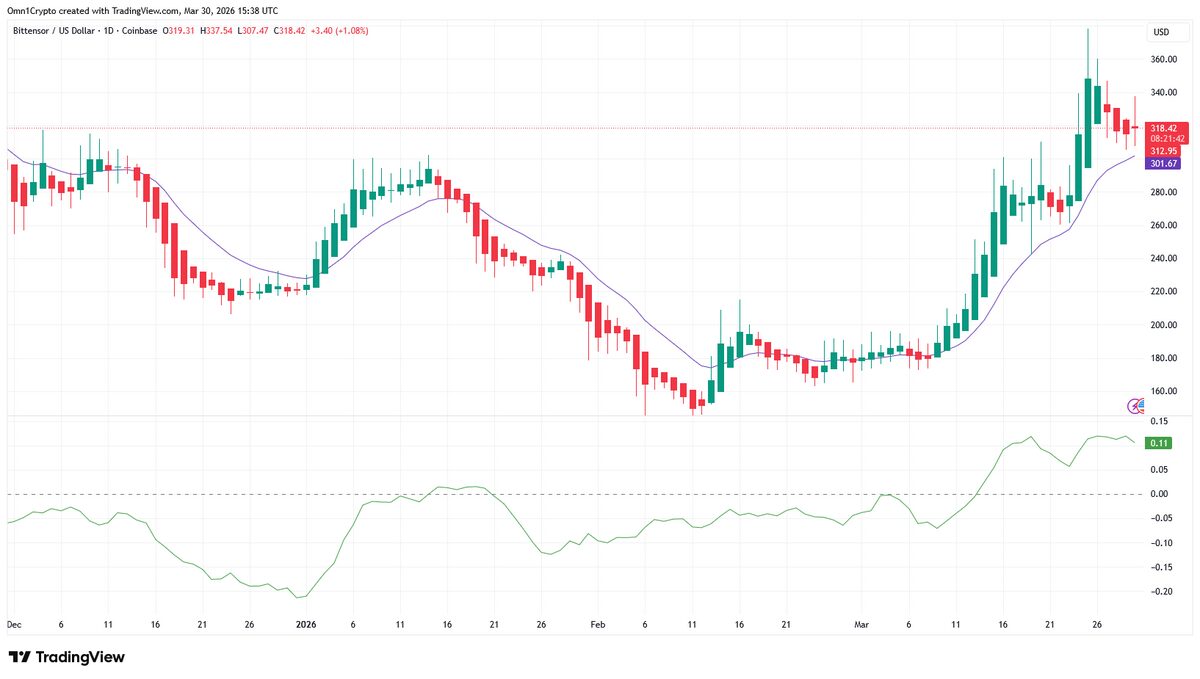
Bittensor’s big-time investors are also showing confidence, judging from the positive Chaikin Money Flow (CMF) index. Still, analysts are flagging a familiar risk: when spot volumes, derivatives activity and retail participation all accelerate at once, price can get unstable. The point isn’t that a reversal is imminent — it’s that the conditions for sharp swings are building.
Institutional Validation Shows Up In Unusual Places
Part of TAO’s momentum is being attributed to attention from outside the crypto bubble.
NVIDIA CEO Jensen Huang referenced Bittensor’s Covenant-72B model in a podcast appearance, with proponents highlighting that the model training was done in a permissionless, decentralized way.
Separately, Manifold Labs — tied to a Bittensor-based compute platform — collaborated with Intel on a technical white paper focused on confidential computing using Intel TDX.
At the same time, some subnets are pointing to revenue traction. One example cited was Subnet Chutes (SN64), which has been described as generating about $22,000 per day.
Why This Matters For Investors Watching The AI News
TAO’s run is increasingly tied to whether “decentralized AI” can prove it has more than vibes: sustained buyer pressure, growing subnet participation, and credible outside interest are helping the bull case. The risk is that the same burst of attention draws overheated leverage and crowded positioning, turning even good news into volatility.
Right now, TAO is becoming a litmus test: in a market that’s been punishing speculative beta, can an AI-linked network token hold gains on fundamentals and flows — or does the trade unwind the moment retail finally shows up in force?
Dig into Ciphera’s top crypto scoops today:
BTC Floor Shaky as Strategy Hoards Most Demand
XRP’s Tug-Of-War Shifts As ETFs Collide With Leverage
