
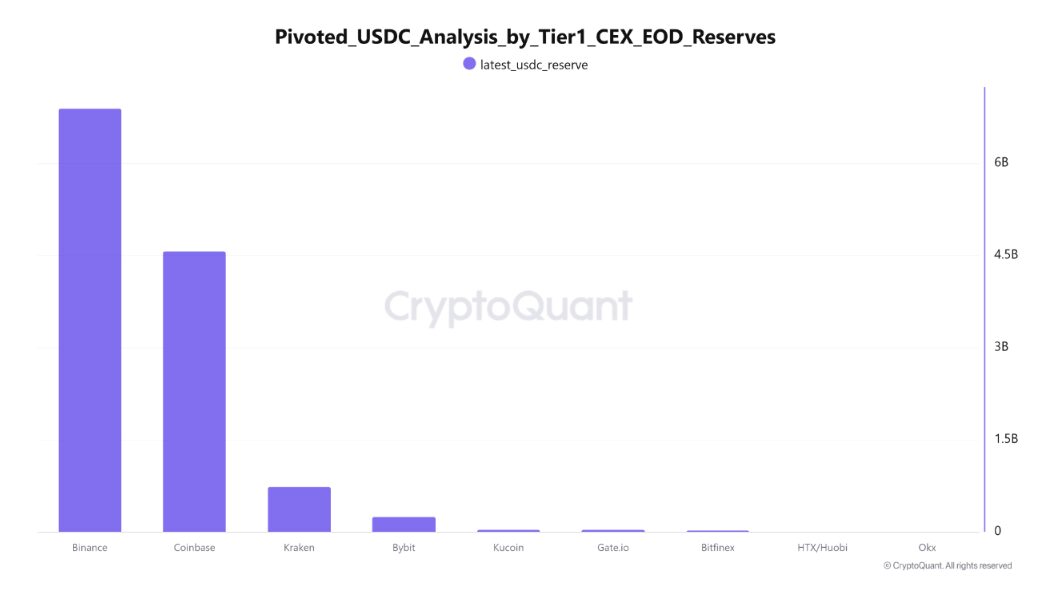
Circle’s USD Coin (USDC) stablecoin reserves on leading centralized exchanges (CEXs) have surged to a record level, nearly doubling in under two weeks, according to on-chain analytics firm CryptoQuant.
from the Ethereum blockchain shows that holdings on these exchanges jumped from roughly $6 billion on August 4 to about $13.2 billion by August 18, the highest level ever recorded.

The surge was largely driven by significant inflows at Coinbase and Kraken. On August 5, both exchanges experienced sudden spikes in USDC reserves, pointing to possible institutional involvement.
Sponsored
Analysts suggest these inflows could reflect “preparations for enhanced liquidity, institutional demand, or reactions to substantial incoming capital.”
When exchanges hold large stablecoin reserves, they allow traders and institutions to move quickly into or out of crypto positions without causing large price swings. This typically reduces volatility and makes the market more efficient.
Binance Holds Firm
Despite the recent growth at other platforms, Binance remains the dominant player, currently holding approximately $7.5 billion in USDC.
The exchange also strengthened its position last week, when it received an inflow of roughly $2.4 billion in USDT.
Why This Matters
While increased stablecoin reserves don’t guarantee a price surge, they provide the firepower for potential upward moves if demand picks up. High stablecoin reserves can signal that exchanges are preparing for major market activity.
Check out Ciphera’s sizzling hot crypto news:
Jackson Hole 2025: Will Powell Spark Another Crypto Bull Run?
Asia’s Rich Turn to Crypto for Growth
People Also Ask:
High USDC reserves allow exchanges to facilitate large trades without causing significant price swings. They support market liquidity and stability.
Rising stablecoin reserves may indicate preparation for increased trading activity or institutional demand, offering early insight into potential market movements.
Not directly. While high reserves provide firepower for potential upward moves, actual price changes depend on market demand and trading activity.
Yes. Monitoring reserve movements can provide clues about institutional strategies, liquidity, and potential market activity.