



Bitcoin (BTC) price bounced back on Monday and is now trading around $87,300 in Europe well below November’s peak of $107,000
Sponsored
The move comes after a bruising week that sent BTC down to $80,000, touching its lowest level in seven months and far below the November peak above $107,000. Nearly $1 trillion in value evaporated during the slide, leaving most Bitcoin ETF buyers underwater as outflows topped $4 billion.
Bitcoin Market Looks Oversold
On-chain data from Glassnode suggests the worst of the sell-off may be easing. Seller momentum is still heavy but starting to cool, and short-term holder supply is rising, a signal that the firm typically sees near the end of corrections.
Perpetual futures CVD remains negative, showing the pressure is still coming from aggressive sellers.
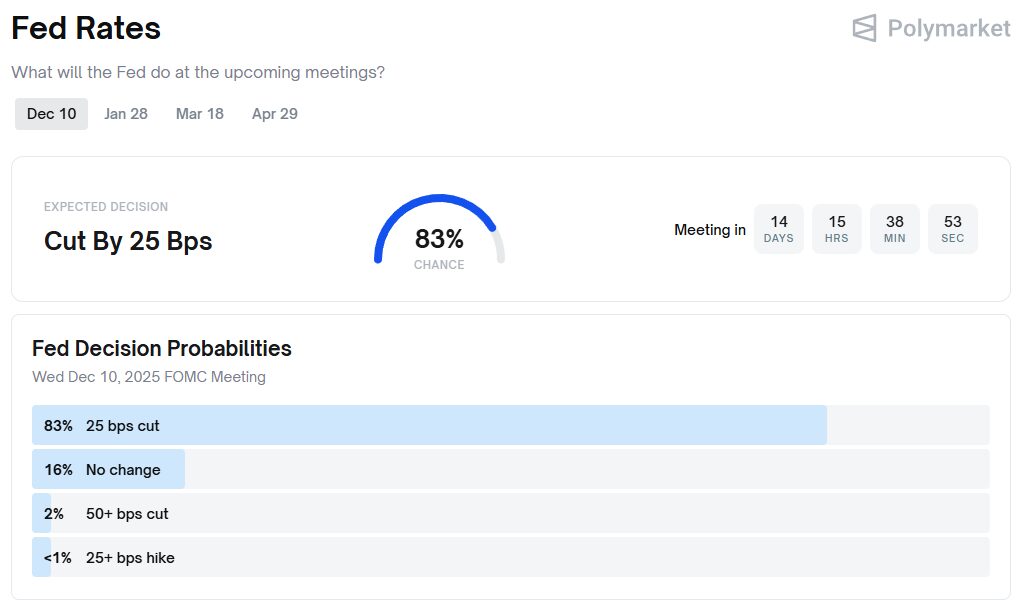
Still, confidence improved, and the Polymarket odds flipped in favor of a December rate cut over the weekend.
Whales Accumulate, Retail Steps Back
Blockchain analytics firm Santiment reported that the number of wallets holding at least 100 Bitcoin has risen by 0.47% since November 11. Meanwhile, smaller wallets, particularly those holding 0.1 BTC or less, have declined.
According to the firm, this kind of retail capitulation often lays the groundwork for healthier long-term price action.
Market sentiment has also shifted notably across social platforms. Crypto investor Ted Pillows commented that the tone has “turned bullish almost overnight,” hinting at the potential for a short-term relief rally lasting one to two weeks.
Still, he warned that late buyers chasing the move risk getting caught in another pullback, even though volatility creates fresh trading opportunities.
Why This Matters
The shift toward rate-cut expectations and early signs of seller exhaustion suggest Bitcoin’s sharp correction may be nearing a temporary bottom.
Dig into Ciphera’s popular crypto news today:
Stellar’s Falling Wedge Deja Vu: Can XLM Double Up Again?
Bitcoin Slides Into Cleanup Phase Amid Trader Capitulation
People Also Ask:
Bitcoin fell due to risk-off sentiment, expectations of higher interest rates, thinning liquidity, and heavy selling in spot and futures markets.
Retail capitulation happens when small, individual investors sell their holdings during sharp declines, often after panic or fear, which can set the stage for a market rebound.
Higher interest rates can reduce risk appetite, prompting investors to sell volatile assets like Bitcoin. Expectations of a rate cut can boost market confidence.
Perpetual futures are derivative contracts without expiration dates. Cumulative Volume Delta (CVD) tracks net buying or selling pressure, indicating whether buyers or sellers dominate.
